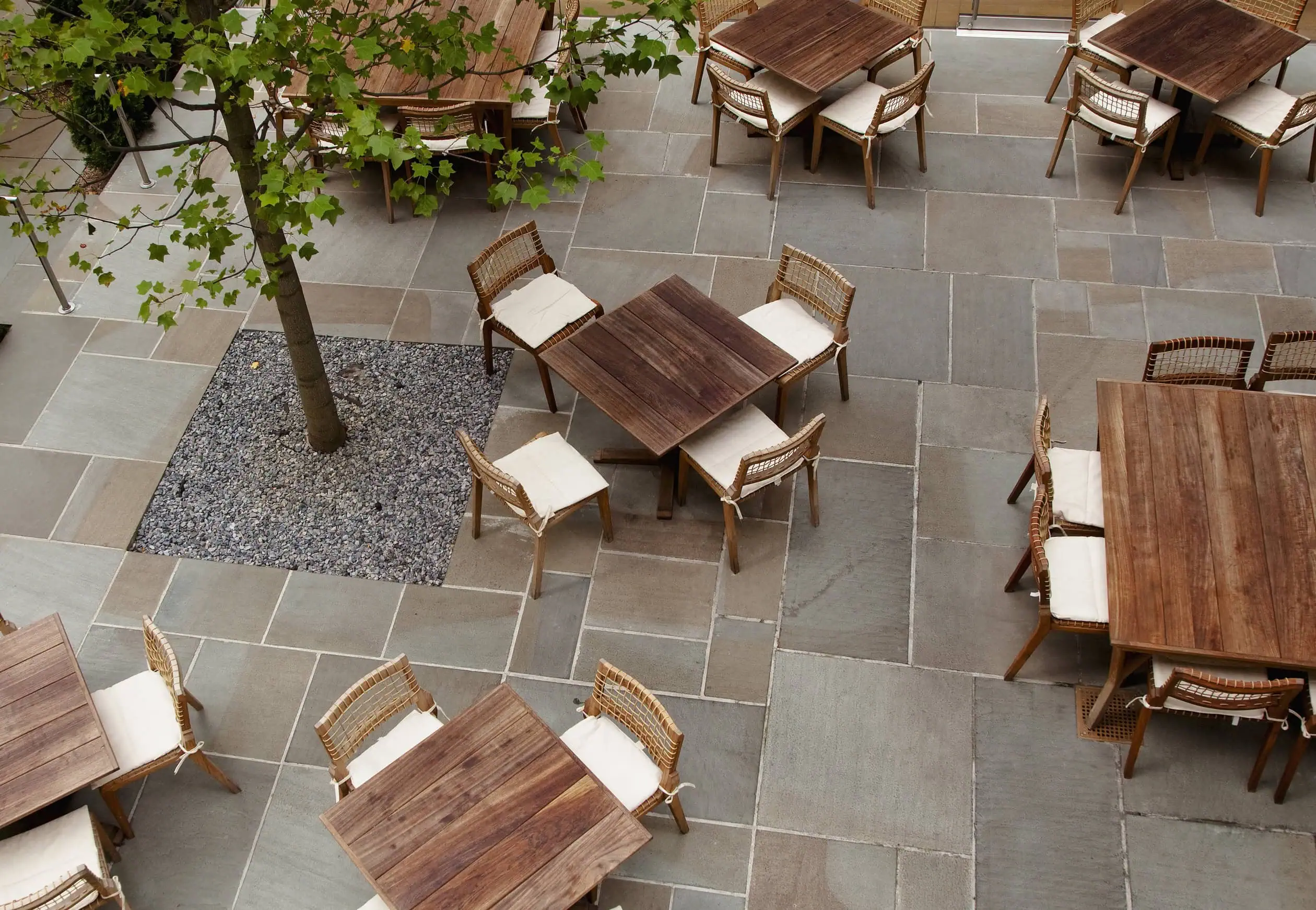
Cleaning a limestone patio starts with working out whether you are dealing with ordinary dirt, biological growth, a stain, or a change to the stone itself. That distinction matters because the treatment for algae is not the treatment for oil or rust, and stronger cleaning will not repair fading or acid etching. If the patio needs a more thorough professional clean, our patio cleaning services cover a range of exterior surfaces and cleaning methods.
One rule applies from the start: avoid acidic cleaners unless the manufacturer specifically confirms suitability for your limestone. Products containing vinegar, lemon or other acids can dull or etch calcareous natural stone.
First, Identify What Is Making the Limestone Look Dirty
Do not choose a cleaner based only on how dirty the patio looks. Colour, location and the pattern of a mark can help distinguish ordinary contamination from a stain or damage to the stone.
| What you can see | What it may indicate | What changes about the cleaning decision |
| General grey or brown grime | Surface dirt | Start with mild cleaning rather than specialist stain treatment |
| Green or slippery areas | Algae or other biological growth | Physical cleaning may be enough for light growth; established growth may need a suitable biological treatment |
| Persistent black spotting | Lichen or other biological contamination | A simple rinse or pressure alone may not address it |
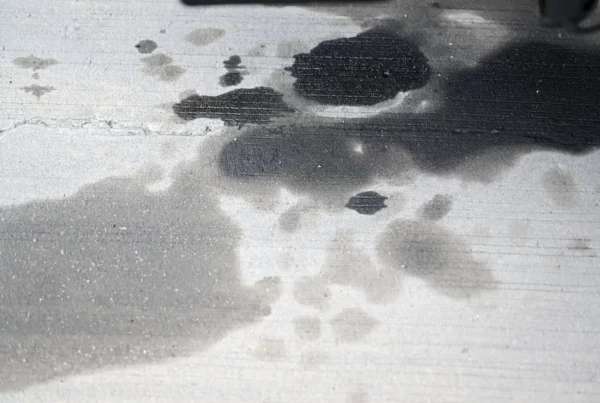
| Dark greasy patch | Oil or grease | Treat the localised stain rather than repeatedly cleaning the whole patio |
| Orange or brown mark near metal | Rust or metal staining | Check that the stain remover is suitable for acid-sensitive stone |
| Dry white powder | Possible efflorescence | Do not automatically wet-clean it; recurring deposits may point to moisture movement |
| Pale or dull patch after chemical exposure | Possible etching | Stop increasing cleaner strength; this may be surface damage |
| Clean black limestone that remains grey | Fading or surface change | Cleaning and colour restoration are different jobs |
This is the most important decision in the process: is something sitting on or in the stone, or has the appearance of the stone itself changed?
How to Clean a Limestone Patio Safely
For ordinary dirt on sound limestone, use a gradual process rather than starting with the strongest chemical or highest water pressure.
1. Sweep First and Inspect the Dry Stone
Remove leaves, soil, grit and loose debris. This makes stains and damaged areas easier to identify and prevents abrasive grit being dragged across the paving during cleaning.
2. Test Before Treating the Whole Patio
Try an unfamiliar cleaner or treatment on an inconspicuous area first. Check the result after the limestone has dried, not only while it is wet and temporarily darker.
Testing is particularly important when the exact limestone, existing surface treatment or previous maintenance history is unknown. Limestone-specific maintenance guidance also recommends trialling treatments such as algaecides on a small area before wider use.
3. Start With the Mildest Appropriate Method
General dirt may need little more than water, a suitable mild cleaner and brushing. Natural Stone Institute guidance recommends neutral cleaner, stone soap or mild detergent as normal cleaning options for natural stone.
If a distinct stain remains after the surface dirt has gone, switch to a treatment appropriate to that stain instead of simply increasing the strength of the whole-patio clean.
4. Rinse and Reassess When Dry
Remove cleaner residue thoroughly and allow the paving to dry before judging the result. If the patio is clean but one area remains pale, dark, powdery or faded, reassess what that mark actually is before repeating the treatment.
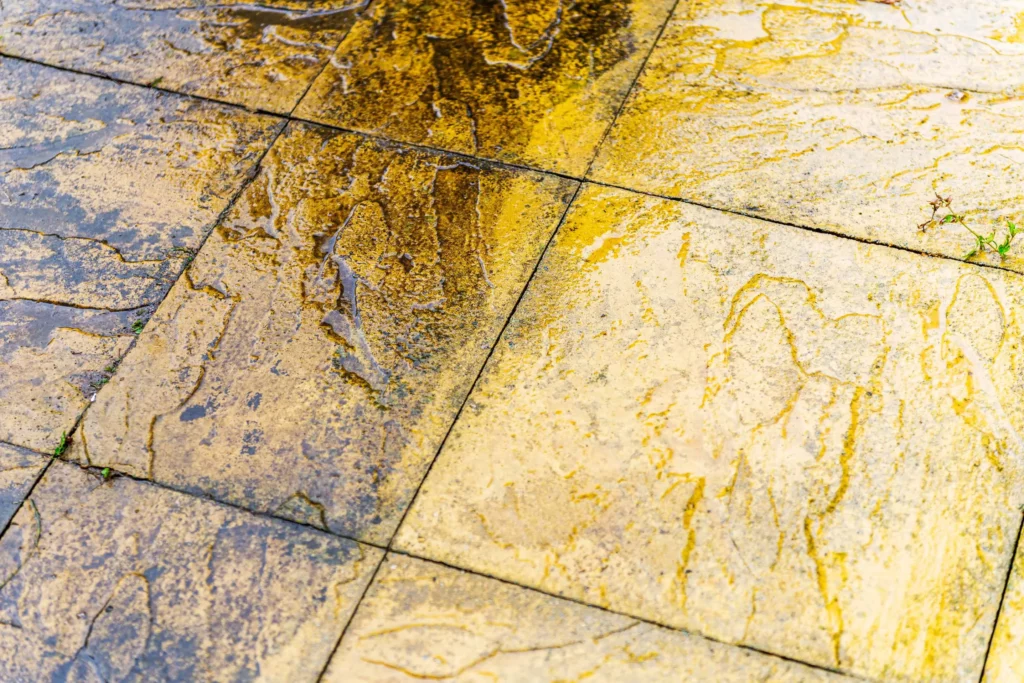
Treat the Problem, Not the Whole Patio
Algae, Moss, Lichen and Black Spots
Light biological growth may respond to brushing and water, while established algae, moss, lichen or black spotting can require a suitable biological treatment.
If using a biocidal product in the UK, check more than its cleaning claim. HSE says members of the public should use products intended for general-public, amateur or non-professional use and should not use biocides restricted to professional users. Follow the product label for application, protective equipment and environmental precautions.
Oil and Grease
Oil can penetrate natural stone rather than remaining only on the surface, so a dark mark may persist after ordinary patio dirt has been removed. Natural Stone Institute guidance treats oil-based staining separately and notes that deeper stone stains can require extraction with a poultice rather than repeated surface cleaning.
Start with a cleaner or degreaser specifically suitable for limestone. If the surrounding paving becomes clean but the dark patch remains, treat it as a stain rather than continuing to scrub the entire slab more aggressively.
Rust and Metal Stains
Orange or brown staining around metal furniture, fixings, pots or other objects should be treated as possible metal staining.
This is a poor place to improvise with a generic household rust remover. Some commercial rust removers contain acids that can attack stone, while deep rust staining can be particularly difficult to remove.
Use a treatment explicitly suitable for limestone or obtain specialist advice if the staining is deep or its cause is unclear.
How to Clean a Limestone Patio: What Should You Avoid Using
The main red flags are:
- vinegar, lemon juice and other acidic DIY cleaners;
- acidic patio or cement-residue cleaners unless specifically approved for the stone;
- limescale removers;
- abrasive scouring powders or aggressive pads;
- a generic rust remover without checking limestone compatibility;
- a professional-only biocide if you are a domestic user.
Acid-based products can etch limestone, while abrasive products can scratch some stone finishes.
Never mix cleaning chemicals simply to make a stronger solution. In particular, bleach and ammonia must not be mixed.
Can You Pressure Wash Limestone Paving?
There is no universal pressure setting that can be described as safe for every limestone patio. The answer depends on the particular stone, its finish and condition, and the paving joints.
So “use low pressure” is not a complete rule. If you do not know exactly what limestone or finish you have, start with brushing and compatible cleaning rather than assuming a pressure washer is suitable.
Where pressure-assisted cleaning is appropriate, test a small area first, avoid concentrating the jet on joints and stop if the texture or colour of the stone begins to change.
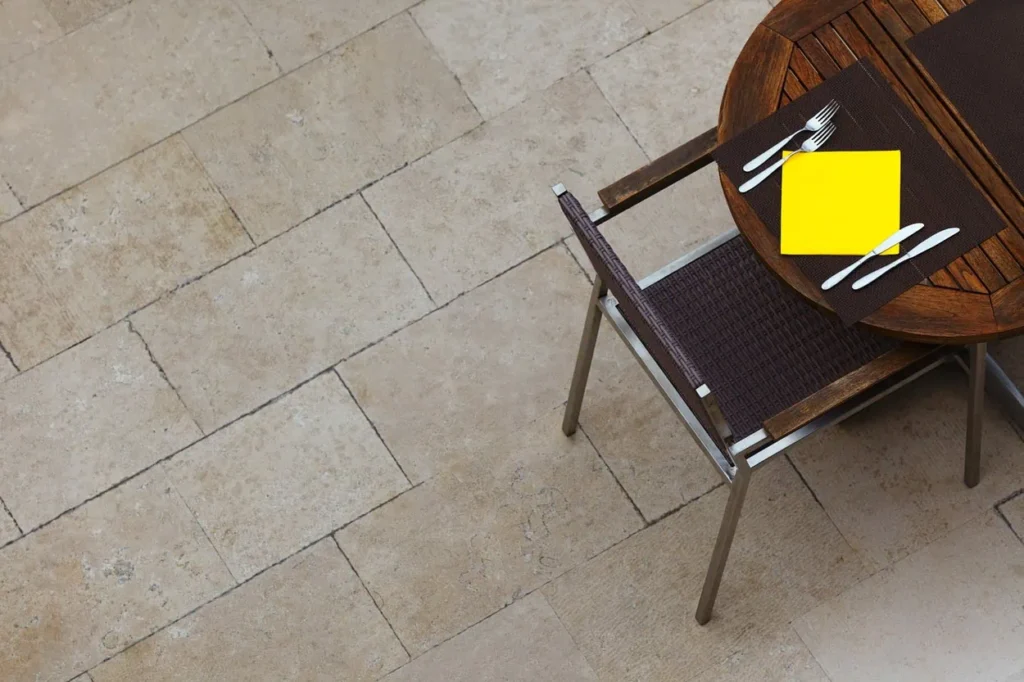
When More Cleaning Is the Wrong Answer
A patio can still look wrong after it is clean. At that point, stronger cleaner or more pressure may make the problem worse rather than better.
Acid Etching
If vinegar, an acidic patio cleaner or another chemical has left a pale, dull or differently textured patch, the stone may have been etched.
Etching is alteration of the surface rather than dirt sitting on it. Natural Stone Institute guidance treats difficult etching as a refinishing or restoration issue rather than something to solve by progressively stronger cleaning.
Faded Black Limestone
Black limestone can be free of dirt but still look grey or washed out. When that happens, distinguish cleaning from colour restoration.
Specialist black-limestone treatment guidance separates cleaning and preparation from the later restorative treatment and recommends testing restorative products before treating the entire area.
If clean paving remains faded, another aggressive wash is therefore not automatically the next step.
Efflorescence
A dry white powder can be efflorescence, caused when moisture carries mineral salts towards the surface and evaporates.
On a new stone installation, it is recommended initially removing the dry powder without water, because wetting it may only make the deposit disappear temporarily. If it keeps returning, the moisture source needs investigation.
This is a clear example of a problem where more washing does not address the cause.
Scratches and Surface Damage
Scratches, worn areas and deteriorated stone are also not stains. Deeper scratches and damaged finishes may require repair or refinishing rather than further cleaning.
Should You Seal Limestone After Cleaning?
Sealing can help some limestone resist staining, but it should not be treated as an automatic final step or placed on a universal two-year schedule.
Natural Stone Institute guidance notes that impregnating treatments make stone more stain resistant rather than stain-proof, that some stone may not require sealing, and that the appropriate product and maintenance frequency should be discussed with the stone or sealer supplier.
If sealing is being considered, first make sure the patio is properly cleaned and that unresolved stains, fading or existing treatments have been identified. Test any product where a change in colour or finish would matter.
How to Clean a Limestone Patio: When Professional Makes Sense
DIY cleaning is most straightforward when you know what the paving is, the stone is in sound condition and the problem is ordinary surface dirt or light biological growth.
Professional assessment becomes more useful when you cannot identify an existing treatment, the stone appears etched or damaged, deep oil or rust staining remains, black limestone is clean but badly faded, a previous DIY treatment has failed, or you are unsure whether pressure washing is suitable for the particular paving.
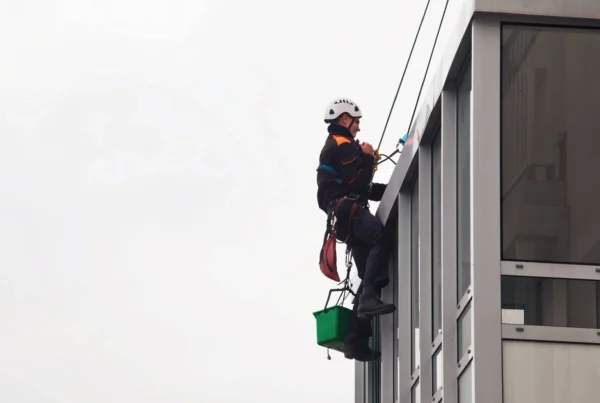
Cardiff Window Cleaner Ltd has provided exterior cleaning since 2015, with more than 70 years of combined team experience across services including pressure washing and specialist soft washing. A professional assessment can therefore focus first on the surface and contamination rather than assuming every limestone patio needs the same cleaning method. Get in touch today!