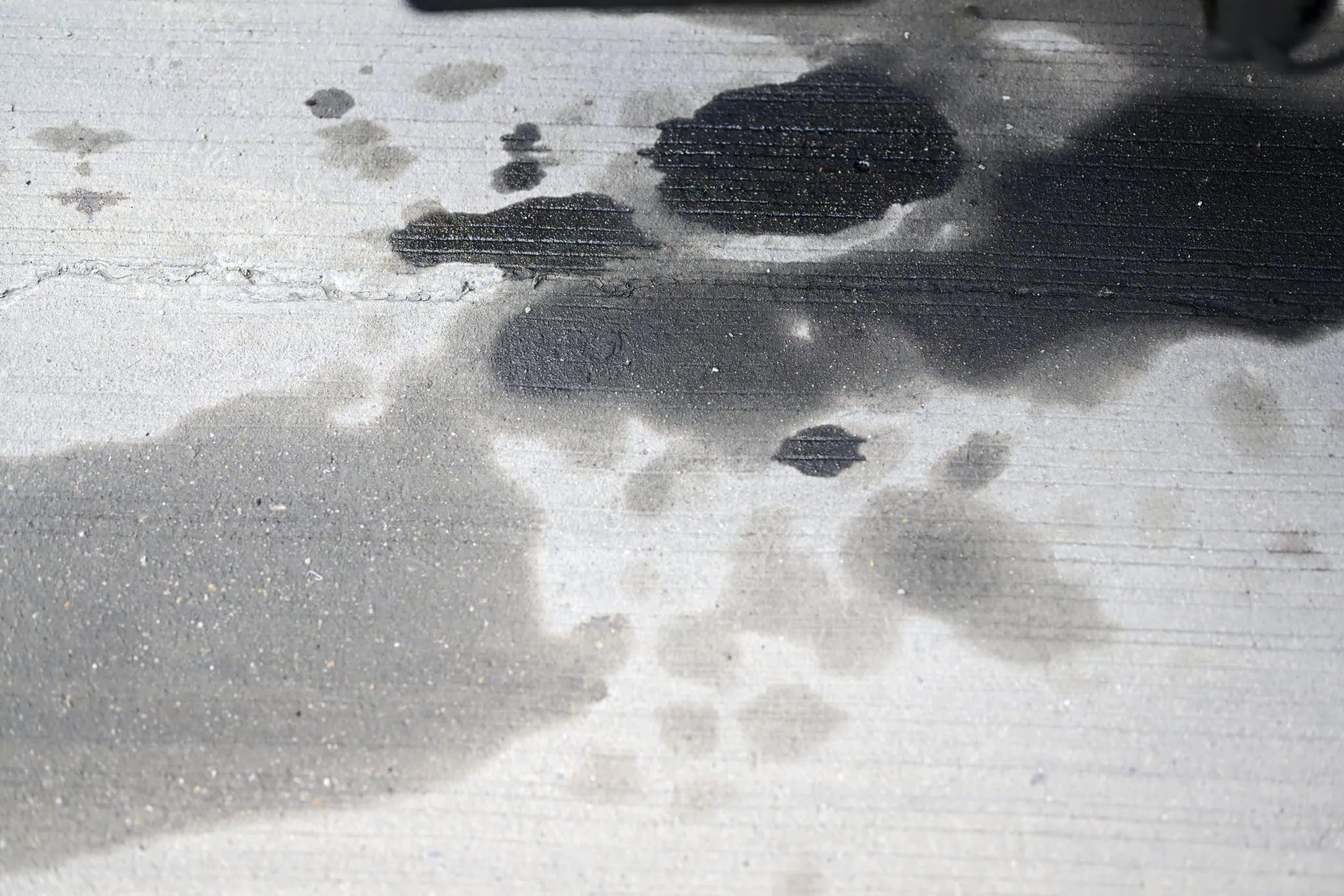
To clean a driveway oil stain, absorb any wet oil before applying water, then treat the remaining mark with a cleaner suitable for the driveway material. Concrete, block paving, tarmac, resin and natural stone require different methods, so identify the surface before choosing a product.
Do not hose or pressure wash a fresh spill. Water can spread the oil, carry it into paving joints and direct polluted runoff towards drains, soil or neighbouring property.
Old oil stains are harder to remove because porous materials absorb oil below the visible surface. They can often be reduced, but several treatments, extraction with a poultice, replacement of individual blocks or professional cleaning may be required.
How to Clean a Driveway Oil Stain in 5 Steps
The correct process is to stop the source, contain the spill, absorb free oil, apply a surface-compatible cleaner and assess the result after the driveway has dried. Begin with the least aggressive method likely to work.
1. Stop the leak
Identify where the oil came from before cleaning.
Place a drip tray beneath a leaking vehicle or machine and arrange the necessary repair. Cleaning the driveway before controlling the source will only produce another stain.
2. Contain and absorb fresh oil
Surround wet oil with absorbent granules, cat litter, sand, sawdust or oil-control socks. Work from the outside edge towards the centre to prevent the spill from spreading.
Cover the oil completely and leave the absorbent in place until the glossy liquid has disappeared. Replace saturated material rather than moving it around the driveway.
3. Collect the contaminated absorbent
Sweep the used material into a secure bag or container.
Do not rinse oily cat litter, sand, sawdust or granules into a drain. Check local council guidance before disposing of oil-contaminated household waste.
4. Apply a compatible cleaner
Treat the remaining mark with a product approved for the driveway surface. Options include a grease-cutting detergent, driveway degreaser, concrete poultice, microbial oil treatment or manufacturer-approved specialist cleaner.
Follow the product instructions for dilution and dwell time. A fixed period such as 15 or 20 minutes is not appropriate for every cleaner or surface.
5. Scrub, recover and reassess
Agitate the treated area with a stiff nylon brush unless the surface manufacturer recommends another method. Collect loosened oil and cleaning residue before rinsing.
Allow the driveway to dry completely before judging the result. Concrete, paving and stone become darker when wet, which can temporarily hide the stain.
| Stain condition | First action | Likely next step |
|---|---|---|
| Fresh and wet | Contain and absorb | Degrease the remaining mark |
| Recent but dry | Apply a compatible degreaser | Scrub and recover residue |
| Old and dark | Use extraction or biological treatment | Repeat or seek professional help |
| Recurring | Repair the leak | Clean after the source is controlled |
| Localised deep stain on block paving | Treat the affected blocks | Consider block replacement |
| Softened or damaged surface | Stop chemical treatment | Arrange a repair assessment |
Check the Stain and Surface Before Cleaning
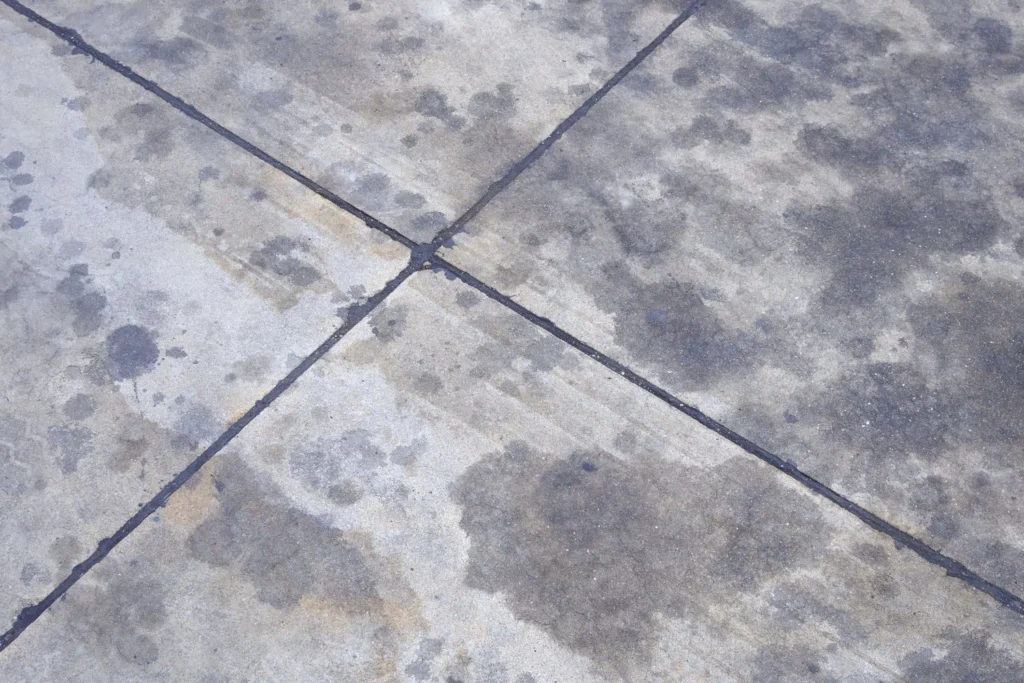
Before selecting a method, identify the age of the stain, the leaked fluid, the driveway material, any existing sealer and the direction in which dirty water could flow. These checks prevent unsuitable chemicals or pressure from causing a larger problem.
Is the oil still wet?
A wet stain looks glossy and may continue spreading. Its free liquid must be absorbed before detergent or water is introduced.
A dry stain has already entered the texture or pores of the surface. It normally requires a cleaner that can lift, extract or break down the remaining oil.
How old is the stain?
Use the appearance and history of the mark to classify it:
| Stain stage | Typical signs | Treatment objective |
|---|---|---|
| Fresh spill | Wet, glossy and spreading | Contain and absorb |
| Recent stain | Dry surface with a defined dark mark | Degrease surface residue |
| Old stain | Flat dark patch present for weeks or months | Extract or break down absorbed oil |
| Recurring stain | Reappears beneath the same vehicle | Repair the leak |
| Damaging contamination | Tarmac softens or resin changes texture | Assess for repair |
What type of liquid caused it?
Common driveway stains include:
- Engine oil
- Diesel
- Transmission fluid
- Hydraulic oil
- Grease
- Brake fluid
- Cooking oil
Unknown automotive fluids should be handled cautiously because they may contain dyes, additives or solvents that affect sealers and binders.
Petrol is a flammable spill rather than an ordinary cleaning problem. Keep ignition sources away and seek appropriate spill advice if a substantial amount has been released.
What is the driveway made from?
The surface determines which treatment is safe.
| Driveway material | Main risk |
|---|---|
| Concrete | Oil penetrates the pores |
| Block paving | Oil enters the blocks and jointing sand |
| Tarmac or asphalt | Oil and solvents can soften the binder |
| Resin-bound surfacing | Harsh chemicals may affect the resin |
| Resin-bonded surfacing | Aggressive cleaning can loosen aggregate |
| Pattern-imprinted concrete | Cleaner can dull or strip the sealer |
| Natural stone | Chemical sensitivity varies by stone type |
| Permeable paving | Polluted liquid may pass into the construction below |
Is the surface sealed?
A sealer may slow oil penetration, but it can also be damaged by an unsuitable cleaner.
Look for water beading, a gloss or satin finish, enhanced colour, or previous sealing records. Test the cleaner in a discreet place and allow the patch to dry before checking for changes in colour, sheen, texture or adhesion.
Where will the residue go?
Identify drains, slopes, lawns, planted borders, permeable surfaces and neighbouring property before using liquid cleaner.
Surface-water drains can discharge directly into the environment. Do not allow oil, degreaser or contaminated wash water to flow into them.
How to Clean a Fresh Oil Spill From a Driveway
Fresh oil should be contained and absorbed before any wet cleaning begins. Prompt dry cleanup limits penetration into porous concrete, blocks and stone.
Stop the source
Turn off leaking machinery where safe and place a drip tray beneath the source.
Move a vehicle only if doing so will not spread oil across a larger area. Protect the route first if movement is unavoidable.
Protect the edge of the spill
Place absorbent granules, sand or oil-control socks around the perimeter. On a sloping driveway, begin at the downhill edge and protect nearby drainage.
Cover the oil
Apply enough absorbent to cover the liquid fully.
Leave it until:
- The glossy appearance has disappeared
- The absorbent has darkened
- No loose liquid is visible beneath it
- The material can be lifted without spreading oil
Repeat with fresh absorbent if the first layer becomes saturated.
Collect the waste
Sweep the contaminated material carefully into a secure container. Clean tools over a contained area rather than rinsing them into a drain.
Treat the residual mark
Once no free oil remains, follow the instructions for the specific driveway surface. Absorption removes loose liquid but does not always remove oil already held in the material.
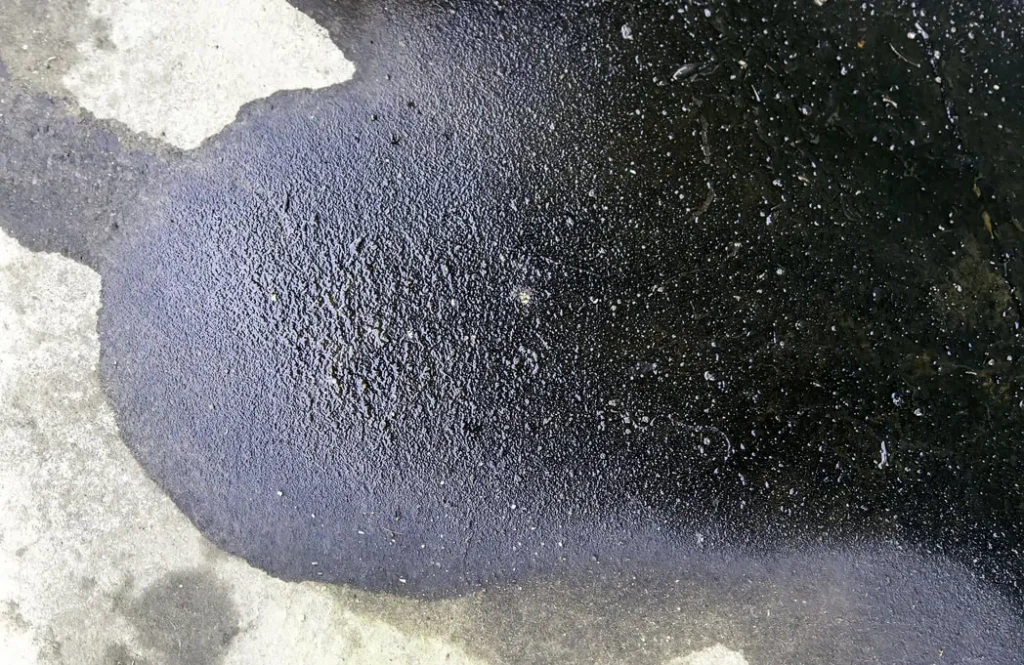
How to Clean an Oil Stain From a Concrete Driveway
To remove oil from concrete, absorb fresh liquid first, then apply a concrete-compatible degreaser and agitate it with a stiff nylon brush. Deep stains may require a poultice or repeated treatment because oil can penetrate below the surface.
Treating a fresh or recent stain
After absorbing loose oil:
- Apply a concrete-safe degreaser according to its instructions.
- Allow the specified dwell time.
- Keep the cleaner from drying if required.
- Scrub with a stiff nylon brush.
- Collect loosened residue.
- Rinse only when the wastewater can be controlled.
Treat the full visible mark rather than only its darkest centre. This reduces the risk of leaving a dark ring.
Treating an old concrete oil stain
An old stain may not respond fully to detergent because the oil is held within the concrete pores.
Start with a proprietary concrete degreaser. If the mark remains after drying, consider a poultice or microbial treatment designed for petroleum contamination.
Using a poultice
A poultice combines a cleaning agent with an absorbent material. As it dries, it draws contamination from the pores towards the surface.
Use a proprietary product rather than creating a solvent mixture. Follow this process:
- Test the product in an inconspicuous place.
- Apply it at the stated thickness.
- Leave it for the required treatment period.
- Remove the dried material.
- Allow the concrete to dry.
- Repeat only if permitted by the manufacturer.
Deep stains may fade progressively rather than disappear after one application.
Using a pressure washer on concrete
Pressure washing is most useful after a compatible cleaner has loosened the residue. Pressure alone cannot reliably remove oil held below the concrete surface.
Begin with conservative pressure, keep the nozzle moving and control the runoff. Excessive pressure can etch the concrete and leave visible cleaning lines.
How to Clean Oil From Block Paving
Oil on block paving must be removed from both the paving units and the joints. Absorb the spill first, use a block-compatible cleaner and prevent oily residue from spreading into neighbouring jointing sand.
Absorb the free oil
Place absorbent over the stained blocks and along the affected joints.
Do not rub a fresh spill across the paving. This increases the number of blocks that may need treatment or replacement.
Apply a compatible degreaser
Use a product approved for the block material and any existing sealer.
Coloured concrete blocks, clay pavers and sealed blocks can react differently, so complete a test patch before treating a prominent area.
Scrub without emptying the joints
Use a stiff nylon brush and work across the block pattern.
Avoid prolonged scrubbing directly along the joints. This can remove sand and push oily liquid deeper between the blocks.
Recover residue before rinsing
Use absorbent material or a suitable wet vacuum to collect loosened oil and cleaner. If rinsing is required, use the smallest practical amount of water and keep it away from drains, lawns and unaffected paving.
Replace lost jointing sand
Scrubbing and pressure washing can remove kiln-dried jointing sand.
Allow the paving to dry, remove visibly contaminated loose sand and refill the joints with a suitable product. Jointing sand should not be applied over oily material.
Consider replacing individual blocks
Replacing one or two deeply stained blocks may be more economical than repeating chemical treatments.
Before fitting a replacement:
- Check whether matching spare blocks are available
- Inspect the bedding beneath the stained block
- Remove contaminated loose material
- Account for colour differences caused by weathering
- Refill the surrounding joints
If no matching block is available, a weathered block from a less visible area may provide a closer visual match.
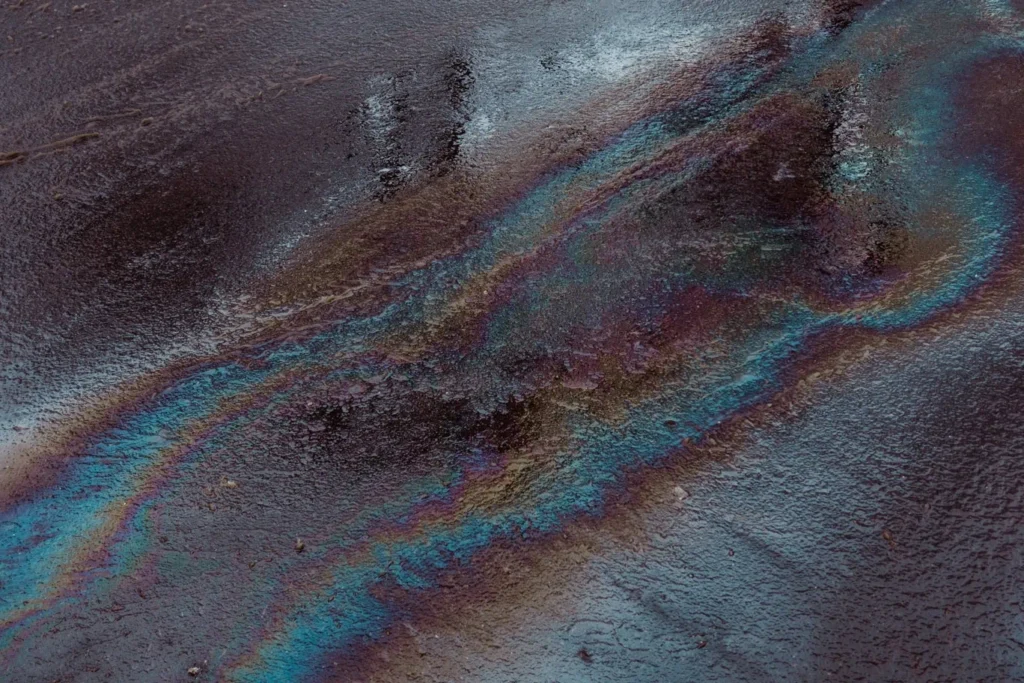
How to Clean Oil From a Tarmac or Asphalt Driveway
Tarmac and asphalt should be cleaned gently because oil, fuel and strong solvents can soften the bituminous binder. Absorb the spill promptly and use a cleaner specifically approved for asphalt surfaces.
Absorb the spill immediately
Use oil granules, absorbent pads, sand or cat litter to remove free liquid.
Do not leave absorbent saturated with oil on the tarmac longer than necessary.
Clean light residue
Apply a mild grease-cutting detergent or an asphalt-compatible oil cleaner. Use a stiff nylon brush and collect the residue before applying additional water.
Several controlled treatments are safer than one aggressive application.
Avoid damaging chemicals
Do not use the following as improvised tarmac cleaners:
- Petrol
- Diesel
- White spirit
- Paint thinner
- Unapproved solvent degreasers
- Strong alkaline oven cleaner
These substances can affect the binder or enlarge the contaminated area.
Pressure wash cautiously
Where pressure washing is permitted:
- Use low pressure
- Select a wide fan pattern
- Keep the nozzle moving
- Test a discreet area
- Avoid cracks, edges and previous repairs
- Stop if aggregate begins to loosen
Pressure washing cannot repair tarmac that has already softened.
Check for structural damage
Arrange an assessment if the affected area becomes:
- Soft
- Sticky
- Crumbly
- Loose
- Depressed
- Deformed
A damaged binder requires repair rather than stronger cleaning chemicals.
How to Clean Oil From a Resin Driveway
Oil on a resin driveway should be absorbed promptly and treated with a cleaner approved by the installer or resin manufacturer. Strong solvents, metal brushes and concentrated pressure can damage the resin or loosen stone.
Identify the resin system
Resin-bound surfacing is made by mixing aggregate with resin before installation. The finished surface is usually smooth and permeable.
Resin-bonded surfacing is created by spreading resin over a base and scattering aggregate onto it. The exposed stone may be more vulnerable to aggressive brushing or washing.
Absorb rather than flush
Place absorbent directly over the spill. Do not force wet oil through a permeable resin-bound surface with a hose.
Use a resin-compatible cleaner
For a small residual mark, mild soapy water may be sufficient if allowed by the installer’s maintenance guidance. Larger or older marks require a cleaner confirmed as compatible with the resin.
Test the product in a discreet area and check the result after drying.
Use gentle agitation
Use a nylon brush rather than a wire brush. Stop if aggregate loosens or the resin changes texture.
Use light pressure only
If the manufacturer permits pressure washing, keep the nozzle moving and avoid close-range spraying.
Contact the installer if the surface is under warranty or shows softening, colour change, loose aggregate, lifting or delamination.
How to Clean Oil From Pattern-Imprinted Concrete or a Sealed Driveway
Oil on pattern-imprinted concrete or sealed paving must be treated without stripping or dulling the coating. Use a cleaner approved for both the sealer and the material beneath it.
Identify the sealer
Check installation records or previous maintenance invoices where available.
A worn sealer may allow oil to penetrate unevenly, while an intact coating may hold most of the contamination near the surface.
Test the cleaner
Apply a small amount in a discreet location and allow it to dry.
Look for:
- Loss of gloss
- Whitening
- Colour change
- Softening
- Stickiness
- Peeling
Do not continue if the test patch changes the coating.
Avoid creating a lighter patch
A cleaner may remove general dirt as well as the oil stain. Treating only a small circle can leave a visibly cleaner area on an otherwise weathered driveway.
Cleaning a full panel or a wider section may provide a more consistent finish.
Do not reseal over active oil
Resealing can trap contamination beneath the coating.
The surface must be clean, dry and compatible with the new sealer before it is treated.
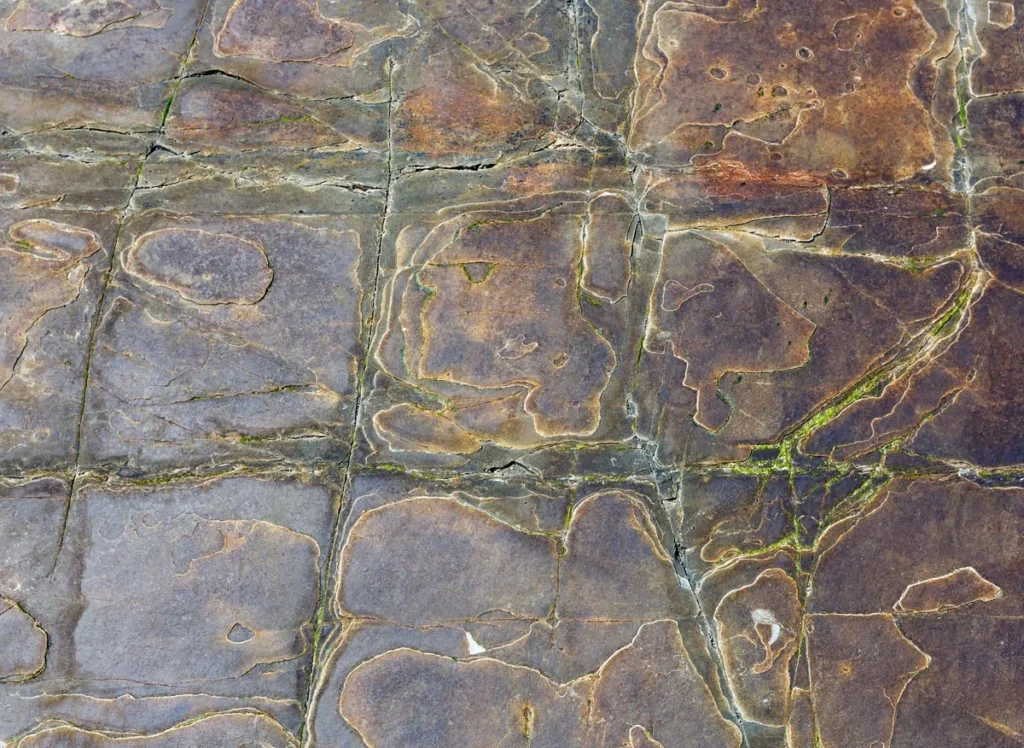
How to Clean Oil From a Natural-Stone Driveway
Natural stone requires a cleaner suitable for the exact stone type and sealer. Products that are safe for concrete can etch, bleach or discolour limestone, sandstone, granite or slate.
Identify the stone
Check the supplier’s paperwork or product records rather than relying on appearance alone.
Different stones can have similar colours but very different porosity and chemical sensitivity.
Avoid universal household remedies
Do not apply vinegar, acidic patio cleaner or a strong alkaline product without confirming compatibility.
Acid-sensitive stone can lose colour or develop a permanently etched surface.
Use a stone-safe degreaser or poultice
Select a product approved for both the stone and any sealer.
A poultice may be suitable for a deep local stain because it extracts oil without flooding the surrounding stone.
Allow a full drying period
Natural stone can remain darker while moisture is held in its pores. Assess the result only after the treated and surrounding areas have dried.
Seek specialist advice for valuable stone, historic paving, polished finishes, unknown sealers or extensive contamination.
Which Oil-Stain Removal Method Should You Use?
Use absorbent for wet oil, degreaser for recent residue, a poultice or biological treatment for deep porous stains, and repair or replacement where the material has been damaged. Choose the least aggressive option that matches both the stain and surface.
| Method | Best for | Main limitation |
|---|---|---|
| Oil absorbent granules | Fresh liquid spills | Do not remove absorbed staining |
| Cat litter, sand or sawdust | Small fresh household spills | Can be messy to collect |
| Washing-up liquid | Light surface residue | Often too mild for old stains |
| Driveway degreaser | Recent or moderate marks | Must be surface-compatible |
| Poultice | Deep local stains in concrete or stone | May need repeated applications |
| Microbial treatment | Older petroleum contamination | Treatment can take longer |
| Pressure washing | Removing pretreated residue | Can spread runoff or damage surfaces |
| Controlled hot-water cleaning | Stubborn residue on suitable paving | Requires specialist control |
| Block replacement | One or two deeply stained pavers | Replacement colour may differ |
| Surface repair | Damaged tarmac or resin | More disruptive than cleaning |
Do Household Remedies Remove Driveway Oil Stains?
Household absorbents and washing-up liquid can help with small fresh spills, but they are not reliable universal treatments. Old stains and specialist surfaces should be treated with products designed for the driveway material.
Cat litter, sand and sawdust
These materials absorb free liquid. They are useful during the first stage of cleanup but do not extract oil that has already penetrated the driveway.
Fine absorbent material generally makes better contact with the spill than large pellets.
Bicarbonate of soda
Bicarbonate of soda can absorb a small amount of surface oil and provide mild abrasive action.
It is unlikely to remove an old engine-oil stain from porous concrete without another treatment.
Washing-up liquid
A grease-cutting washing-up liquid may remove light surface residue from a compatible driveway.
Use only enough to treat the mark. Excess detergent creates more polluted water without guaranteeing a better result.
Vinegar and cola
Both are acidic and should not be treated as universal driveway cleaners.
They can affect acid-sensitive natural stone, cement-based surfaces, pigments, coatings and sealers.
Oven cleaner
Oven cleaners may contain strong alkaline ingredients. They can discolour paving, damage coatings, harm nearby planting and create difficult contaminated runoff.
Use a driveway-specific product instead.
WD-40 and other oily sprays
Adding another petroleum-based product can spread the mark and complicate cleanup.
An oily spray may appear to lighten a stain temporarily by making the surrounding area darker, rather than removing the contamination.
Petrol, diesel and paint thinner
Do not use fuels or flammable solvents as casual driveway cleaners.
They create fire and pollution risks and can damage tarmac, resin, sealers and other surface materials.
Can You Pressure Wash an Oil Stain From a Driveway?
A pressure washer can remove oil residue after suitable pretreatment, but it should not be used on loose oil or treated as the main stain-removal method. Incorrect use can spread contamination, remove jointing sand and damage surface coatings.
Absorb and pre-treat first
Remove free oil before using pressurised water.
Apply a compatible cleaner and allow it to work according to the manufacturer’s instructions.
Use the lowest effective pressure
There is no universal pressure setting for every driveway and machine.
Begin conservatively, maintain distance and increase cleaning force only if the surface remains stable.
Keep the nozzle moving
Use smooth, overlapping passes. Holding the jet in one place can etch concrete, disturb joints or expose aggregate.
Protect vulnerable areas
Avoid concentrated pressure around:
- Block-paving joints
- Cracks
- Tarmac edges
- Resin transitions
- Sealed areas
- Previous repairs
Control the wastewater
Place drain covers and absorbent barriers before wet cleaning. Collect contaminated water where practical rather than allowing it to run into the road or drainage system.
Re-sand block paving
If pressure washing removes jointing sand, allow the paving to dry and refill the joints with a suitable kiln-dried sand.
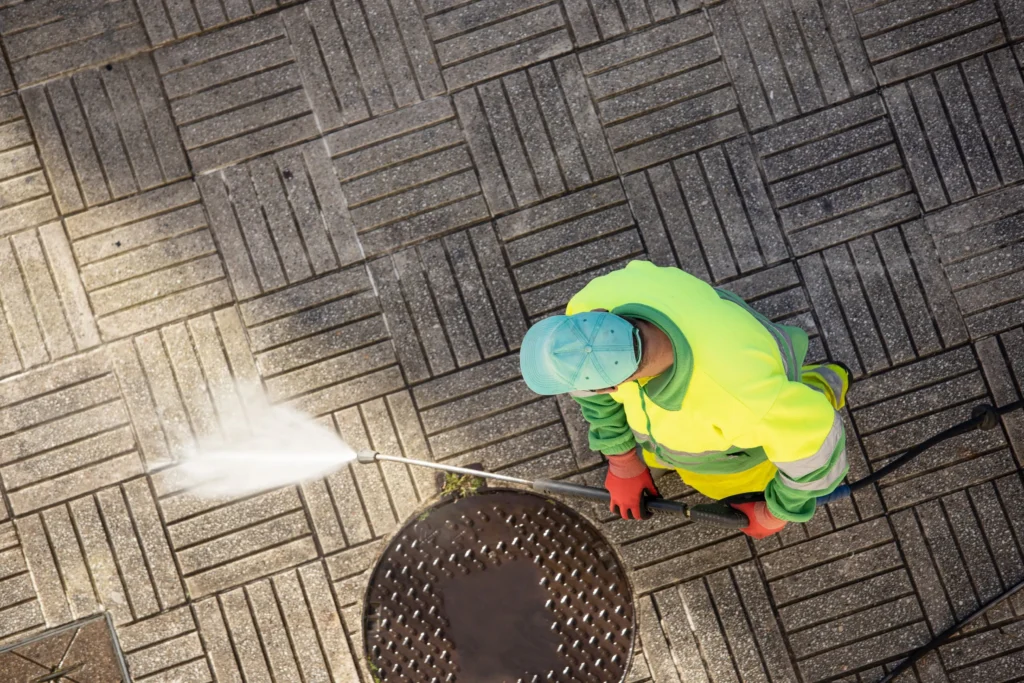
How to Keep Oil and Cleaning Water Out of Drains
Protect nearby drainage before applying liquid cleaner and collect contaminated residue wherever practical. Oil, degreaser and dirty wash water should not be allowed to enter surface-water drains, soakaways, gardens or watercourses.
Identify the drainage route
Look for:
- Channel drains
- Road gullies
- Yard drains
- Soakaways
- Permeable paving
- Slopes towards neighbouring land
On a commercial or managed property, check the site drainage plan rather than assuming where a drain leads.
Protect the drain
Use drain covers, absorbent socks, sand barriers or temporary bunding before cleaning begins.
Place protection on the downhill side of the stain as well as directly around the drain.
Recover the residue
Absorb small quantities with granules or pads. A suitable wet vacuum or professional recovery unit may be needed for larger amounts of contaminated liquid.
Use only equipment designed for the liquid and cleaning chemicals involved.
Dispose of contaminated waste correctly
Seal oil-soaked absorbent, sweepings and recovered residue in a suitable container.
Householders should check local council or recycling-centre rules. Businesses may need to use an authorised waste carrier and retain the required waste documentation.
Do not assume that contaminated water can be discharged into a foul sewer. Commercial discharges may require permission from the wastewater provider.
Why Is the Oil Stain Still Visible After Cleaning?
An oil stain can remain visible because the surface is wet, oil remains below the surface, or the cleaned patch is lighter than the surrounding driveway. Let the area dry fully before repeating treatment or choosing a stronger method.
The driveway is still wet
Concrete, blocks and natural stone become darker when wet.
Drying time depends on the material, weather, shade and amount of water used.
Oil remains below the surface
Subsurface oil can migrate back towards the top as the driveway dries. This can make a stain appear to return after an initially successful clean.
A poultice or compatible biological treatment may be more effective than repeated surface washing.
The treated area is cleaner
Degreaser can remove general dirt around the oil stain.
The original mark may be reduced while the cleaned area still appears different from the weathered driveway around it.
The stain has permanently altered the surface
Old contamination can leave residual discolouration even after removable oil has been reduced.
At this stage, the practical options are to accept a faint shadow, repeat an approved extraction treatment, replace local paving units or clean a wider area for better colour consistency.
Should You Clean, Repair or Replace the Stained Area?
Continue cleaning only while the stain is improving and the driveway remains undamaged. Replace individual blocks or repair the surface when contamination is too deep or has weakened tarmac, resin or another structural layer.
| Condition | Recommended action |
|---|---|
| Fresh surface oil | Absorb and degrease |
| Faint mark after one clean | Let it dry and reassess |
| Old concrete stain | Use a poultice or specialist treatment |
| One deeply stained paving block | Consider replacement |
| Oily jointing sand | Remove and replace affected loose material |
| Soft or crumbling tarmac | Arrange repair |
| Loose or discoloured resin | Contact the installer |
| Large spill near drains | Use professional containment and recovery |
| Recurring vehicle stain | Repair the leak before cleaning |
Repeat the treatment when it is working
Another application may be worthwhile when the first treatment has clearly reduced the stain and caused no surface damage.
Do not move automatically to a stronger chemical. Repeated aggressive treatment can cause bleaching, etching, coating failure or binder damage.
Replace localised block paving
Replacing one or two blocks can provide a more reliable result than repeatedly treating oil that has penetrated through the unit.
Check the bedding and joint material beneath the block before installing the replacement.
Repair damaged tarmac or resin
Cleaning cannot restore a binder that has softened or a resin layer that has loosened.
Arrange a surface assessment if the material is sticky, crumbly, depressed, delaminated or shedding aggregate.
Clean a wider section for colour consistency
A successful spot treatment may reveal the dirt and weathering across the rest of the driveway.
Cleaning a full panel or the wider surface can create a more consistent result.
A fresh oil spill is usually easier to manage than a stain that has been left to penetrate the driveway. Absorb loose oil first, use a treatment compatible with the surface and protect nearby drainage throughout the work.
For an old stain, widespread contamination or a driveway that needs an even professional finish, visit our driveway cleaning service page.
Cardiff Window Cleaner Ltd provides professional exterior cleaning for residential, commercial and communal properties in Cardiff and surrounding areas. If you need help assessing or cleaning a driveway oil stain, get in touch to discuss the surface, the extent of the mark and the most suitable treatment.
How to Clean a Driveway Oil Stain FAQs
What is the fastest way to clean a fresh driveway oil stain?
Contain the spill and cover it with oil absorbent granules, cat litter, sand or sawdust. Collect the saturated material before treating the remaining mark with a cleaner suitable for the driveway.
How do you remove an old oil stain from concrete?
Start with a concrete-compatible degreaser. If the mark remains after drying, use a proprietary poultice or microbial treatment designed for absorbed petroleum stains.
Will washing-up liquid remove oil from a driveway?
Washing-up liquid may remove light surface residue after free oil has been absorbed. It is less effective on old stains that have entered concrete, block paving or natural stone.
Can bicarbonate of soda remove an oil stain?
Bicarbonate of soda can absorb a small fresh spill and provide mild abrasive action. It is unlikely to remove a deep or old automotive oil stain by itself.
Can you pressure wash oil off a driveway?
Pressure washing can remove loosened residue after pretreatment. It should not be used on wet oil and may damage joints, tarmac, resin or coatings if applied too aggressively.
Does oil permanently stain block paving?
Deeply absorbed oil can leave a permanent shadow. Repeated treatment may reduce it, but replacing the affected block can be more practical for a severe local stain.
Can oil damage tarmac?
Oil and fuel can soften the bituminous binder in tarmac and asphalt. Soft, loose or deformed areas may require repair.
How do you remove oil from a resin-bound driveway?
Absorb the spill first, then use mild soapy water or a cleaner approved by the installer. Avoid harsh solvents, wire brushes and concentrated pressure.
Why did the stain return after cleaning?
Oil may remain below the surface and migrate upwards as the driveway dries. A poultice or compatible biological treatment may be needed to draw out or break down the remaining contamination.
Can a stained paving block be replaced?
Yes. Individual blocks can often be lifted and replaced, but the bedding and jointing material beneath them should also be checked for contamination.
Where should oily wash water go?
It should be contained and collected rather than allowed into a surface-water drain, soakaway, garden or watercourse. Commercial disposal or sewer discharge may require specialist arrangements or permission.
When should you stop trying DIY treatments?
Stop when the surface begins changing colour or texture, the stain is no longer improving, wastewater cannot be controlled, or the driveway material may require repair.