
Most cladding should be cleaned once a year, or every 6–12 months if the building is exposed to moisture, shade, or pollution. Regular cleaning prevents algae build-up, protects surface finishes, and keeps the property looking well maintained.
Cladding is one of those surfaces that looks clean right up until it suddenly does not. One season it reflects light nicely, the next it starts to show green streaks, dull patches, or uneven staining that makes the whole building feel neglected.
The tricky part is that cladding does not fail loudly. It slowly collects dirt, algae, and airborne pollution, and by the time you notice it, the build-up has already settled in. That is why the real question is not just how to clean it, but how often you should be doing it in the first place.
Key Takeaways
- Most homes need cladding cleaning once every 12 months
- Damp, shaded, or tree-heavy areas may require cleaning every 6–12 months
- Green film and streaks are early signs that cleaning is overdue
- Different materials need different care, but all benefit from regular maintenance
- Commercial buildings are usually cleaned more frequently for appearance standards
- Cleaning early is easier and cheaper than removing heavy build-up later
- Safe cleaning methods use low pressure, proper chemicals, and pure water systems
How Often Should Cladding Be Cleaned in Different Conditions
Cladding does not get dirty at the same rate everywhere. A clean façade in one location might stay bright for years, while another starts showing green film within months.
Several factors influence this:
- Moisture exposure from rain, shade, or poor drainage
- Air pollution from roads or urban environments
- Biological growth such as algae, especially on north-facing walls
- Surface type and finish, which determines how easily dirt sticks
A sheltered wall with good airflow might need minimal attention, while a shaded elevation surrounded by trees can develop visible algae surprisingly quickly.
Recommended Cladding Cleaning Frequency by Environment
Your surroundings often matter more than the building itself. The table below gives a realistic guide based on location and exposure.
| Environment | Cleaning Frequency |
| Rural, open space | Every 12–18 months |
| Suburban residential | Every 12 months |
| Near trees or shaded areas | Every 6–12 months |
| Coastal areas | Every 6–12 months |
| Busy urban or roadside | Every 6–12 months |
Properties near trees or in damp conditions are the most likely to develop the familiar green film. Once it appears, it tends to spread rather than stay contained.
Recommended Cleaning Frequency by Cladding Material
Different materials hold dirt and moisture differently, which affects how often they need cleaning.
| Cladding Type | Recommended Frequency | Notes |
| uPVC / Plastic | Every 12 months | Can show streaking and algae quickly |
| Metal (aluminium, steel) | Every 6–12 months | Sensitive coatings require gentle cleaning |
| Composite | Every 12 months | Low maintenance but still collects film |
| Timber | Every 6–12 months | Needs regular care to prevent weathering |
| Stone | Every 12–18 months | Porous surfaces hold dirt longer |
Timber and metal cladding tend to show changes faster, either through staining or dulling of the finish. Plastic and composite may look clean from a distance, but often develop uneven patches over time.
How Often Should Cladding Be Cleaned for Residential vs Commercial Buildings
Residential cladding is typically cleaned once a year, while commercial buildings often require cleaning every 6 to 12 months to maintain appearance and meet presentation standards.
Commercial properties face different expectations. A shopfront, office building, or managed property cannot afford to look neglected, even if the issue is only cosmetic.
In residential settings, cleaning is often reactive. In commercial settings, it is usually planned as part of regular maintenance.
Signs Your Cladding Needs Cleaning Sooner Than Planned
Cladding rarely gives one obvious warning sign. Instead, it gradually changes appearance.
Look out for:
- Green or dark streaks forming on the surface
- Uneven colouring or patchy shading
- A dull, chalky finish instead of a clean sheen
- Dirt lines beneath joints or edges
- Build-up around gutters or downpipes
These signs often appear first on shaded or north-facing sides of a building. Once visible, they tend to spread if left untreated.
What Happens If Cladding Is Not Cleaned Regularly?
Cladding that is not cleaned regularly will accumulate organic growth, surface staining, and moisture retention, which can shorten its lifespan and affect the building’s appearance.
Algae and grime do more than sit on the surface. They trap moisture, which can slowly affect coatings, joints, and materials underneath. Over time, this can lead to:
- Faster wear of protective finishes
- Increased staining that becomes harder to remove
- Potential long-term surface damage
Regular cleaning is less about making it look good and more about preventing gradual deterioration.
When Is the Best Time of Year to Clean Cladding?
The best time to clean cladding is during mild, dry weather in spring or early autumn, when surfaces are not too hot and cleaning solutions can work effectively.
Avoid cleaning in strong sunlight because it causes solutions to dry too quickly, which can leave marks. Very cold conditions are also not ideal, as moisture may not evaporate properly.
Spring is often the most practical time, as it removes winter build-up and prepares the building for the rest of the year.
How Cladding Is Safely Cleaned
Cladding is typically cleaned using low-pressure systems combined with appropriate cleaning solutions, often using a method known as soft washing, which safely removes algae and staining without damaging the surface.
In practice, this often involves:
- Pole systems from the ground for standard-height buildings
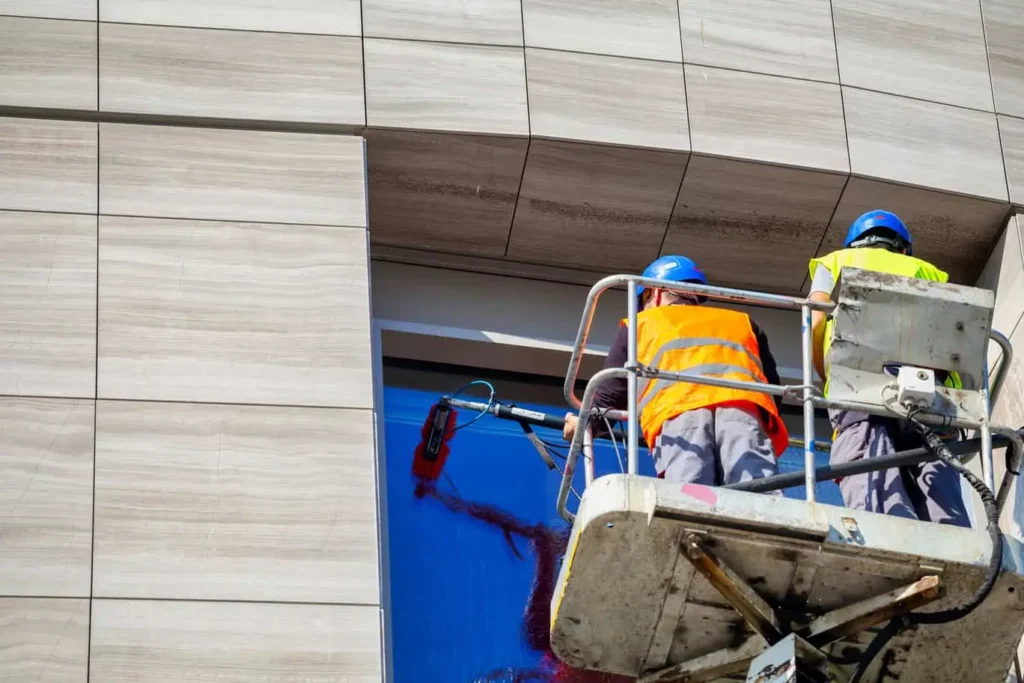
- Cherry pickers or access equipment for higher sections
- Specialist cleaning solutions to remove algae or green film
- Pure water systems to leave a clean, streak-free finish
For example, in builder’s cleans before handover, cladding is often cleaned using access equipment for high areas, while lower sections are handled safely from the ground. The same approach applies to maintenance cleaning, especially when dealing with algae growth.
The key difference between proper cleaning and a quick rinse is control. Using the right pressure and the right solution ensures the surface is cleaned without damage.
How Often Should Cladding Be Cleaned to Prevent Stains and Damage
Most properties benefit from a simple rule. Clean cladding once a year, or twice if the environment encourages faster build-up. The earlier you act, the easier the job becomes.
If you start to notice green film or uneven patches, that is your signal to act rather than wait. Cleaning at that stage is straightforward. Leaving it longer usually means more effort, stronger chemicals, or multiple passes.
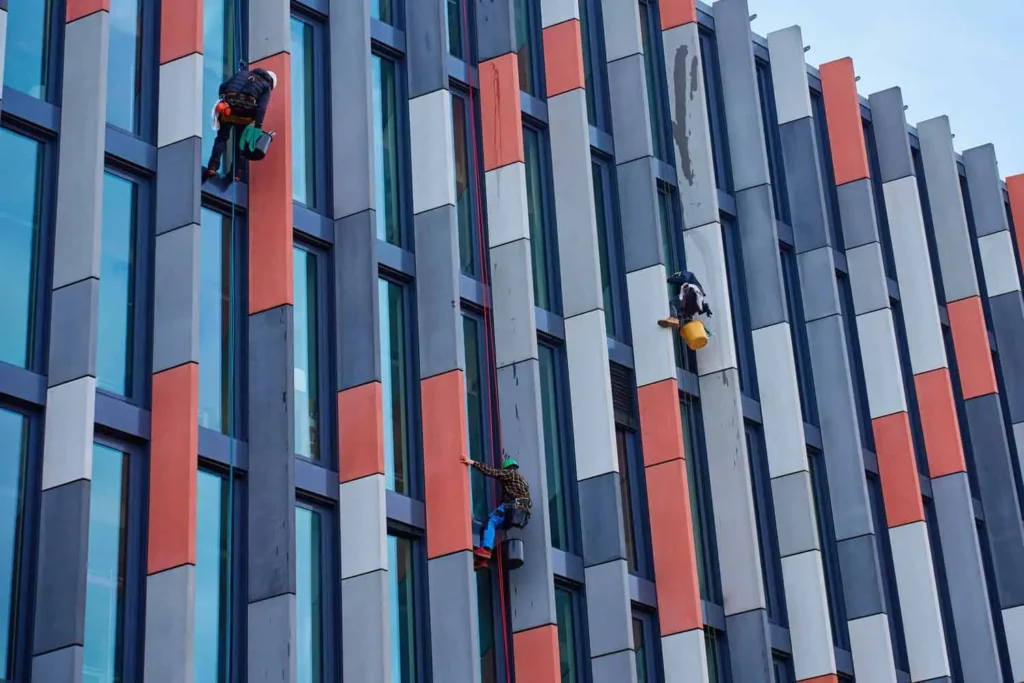
If access is difficult or the building is high, it is often more practical to bring in a professional team with the right equipment. They can clean safely from the ground or use access systems where needed, and they will usually spot issues before they become expensive.
At Cardiff Window Cleaner Ltd, we carry out cladding cleaning using a combination of high-reach pole systems, specialist cleaning solutions, and access equipment such as cherry pickers for taller areas. Get in touch today!