To keep windows clean for longer, reduce hard water exposure, clean frames and tracks regularly, and avoid leaving soap residue on the glass. The biggest difference usually comes from controlling water and cleaning properly, not from expensive products.
Clean windows look great… for about five minutes.
Then the dust comes back, or streaks appear, or those annoying white spots show up out of nowhere.
The truth is, keeping windows clean for longer isn’t about using stronger products. It’s about understanding why they get dirty in the first place, and quietly removing those causes.
Let’s break it down in a way that actually helps.
Key Takeaways
- Hard water spots are one of the biggest reasons windows look dirty quickly
- Dirty frames and sills often re-contaminate freshly cleaned glass
- Too much soap leaves residue that attracts more dirt
- Pure water or low-mineral water helps reduce spotting
- Cleaning in direct sunlight usually causes streaks
- Regular light maintenance works better than occasional deep cleaning
- Professional pure water systems often keep windows cleaner for longer
Why Your Windows Get Dirty So Quickly
Most people think dirt just “lands” on windows. It does, but that’s only half the story.
What really matters is what sticks and what dries on the glass.
There are four main culprits:
- Airborne dirt: dust, pollen, pollution, salt
- Water: especially hard water from rain, hoses, or sprinklers
- Runoff: dirty water dripping from frames, sills, or above
- Cleaning residue: soap or product left behind
Windows don’t stay dirty because of dirt. They stay dirty because something helps that dirt stick.
That “something” is usually water or residue.
How to Keep Windows Clean: The Simple Strategy That Actually Works
If you want windows to stay clean longer, think in three layers:
1. Stop the dirt landing, or reduce it
You can’t control the air. But you can control water and runoff.
Focus on:
- Sprinklers hitting your windows
This is the biggest hidden problem. Hard water leaves mineral spots that are very hard to remove later. - Dirty frames and sills
When it rains, dirt from frames runs straight onto clean glass. - Indoor condensation
If your windows steam up regularly, that moisture dries into streaks and films.
If you fix just one thing: Stop water hitting your windows unnecessarily.
2. Make it harder for dirt to stick
You’ve probably seen things like “easy-clean glass” or treatments. They work, but only in the right situation.
| Option | How it works | Best for | What to know |
|---|---|---|---|
| Hydrophilic, or self-cleaning glass | Water spreads evenly across the surface instead of forming beads. Rain can then help wash dirt away. | Exterior windows exposed to rain and daylight. | Works best when the glass actually gets rain and sun. It is less useful under deep overhangs. |
| Hydrophobic coatings, or water-repellent coatings | Water beads and rolls off the glass, making it harder for grime to stick. | Windows affected by light dirt, water marks, or frequent cleaning. | Can still leave spots if hard water beads on the glass and dries there. |
| Protective films | Adds a surface layer over the glass, usually for protection rather than self-cleaning. | Glass exposed to scratching, vandalism, or heavy wear. | Not automatically “easy clean”. Films need gentle, non-abrasive cleaning. |
No coating makes windows maintenance-free. They just make cleaning easier and less frequent.
3. Clean properly, because this matters more than you think
Most people accidentally make their windows dirtier faster when cleaning.
The goal is simple: Remove dirt without leaving anything behind.
That means:
- No heavy soap
- No residue
- No mineral water drying on the glass
How to Keep Windows Clean After Washing Them
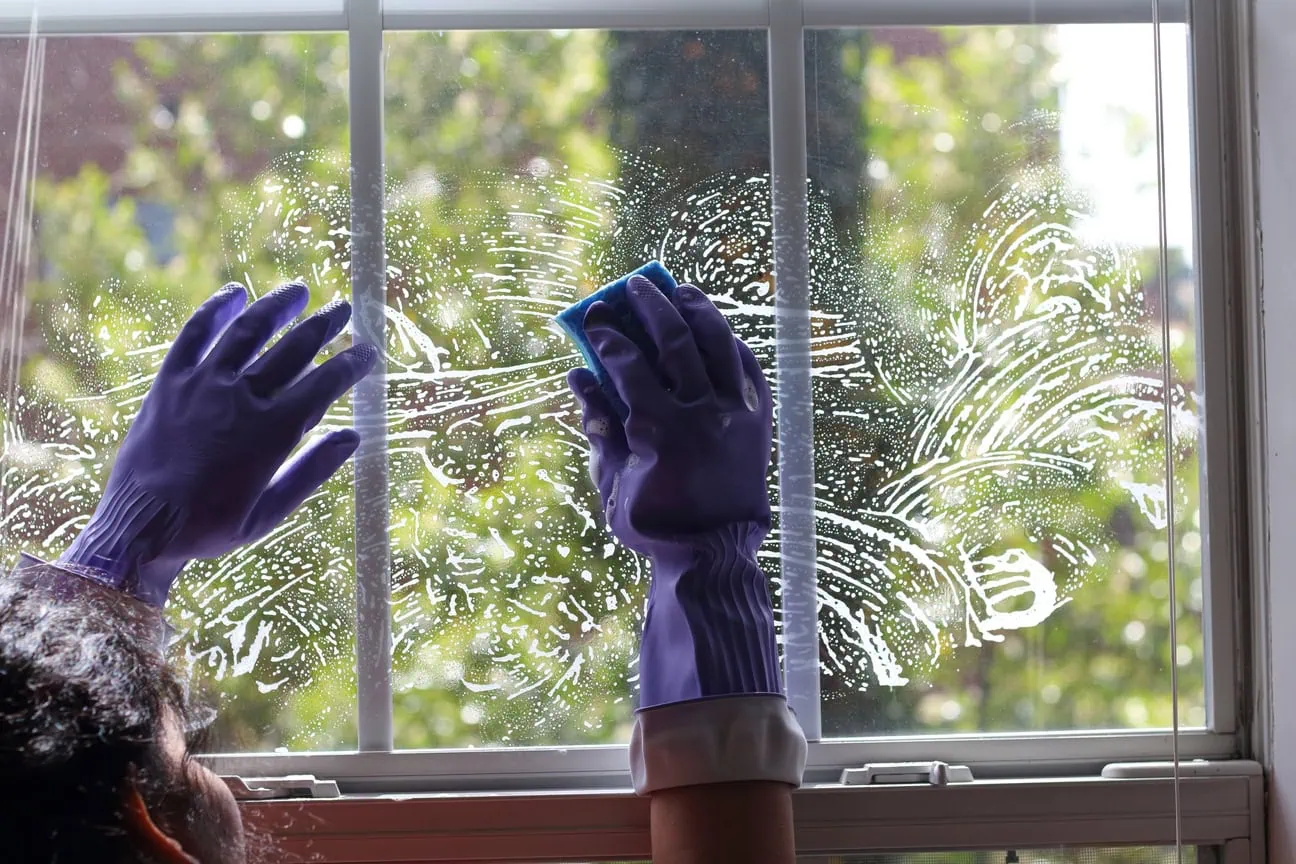
This is the method professionals rely on.
What to use
- Warm water
- A few drops of washing-up liquid (literally a few)
- Squeegee
- Soft cloth
That’s it.
What to do
- Apply the solution lightly
- Clean with a soft applicator
- Squeegee immediately
- Wipe edges with a dry cloth
The big mistake: Using too much soap. It leaves a film that attracts dirt.
The Real Enemy: Hard Water Spots
Those white marks that never seem to go away?
That’s not dirt. It’s minerals (calcium and magnesium).
They’re left behind when water evaporates.
Common sources:
- Sprinklers
- Hose splashes
- Rain in hard water areas
How to avoid them
- Don’t let water dry naturally on glass
- Squeegee after rinsing
- Use low-mineral water for final rinse if possible
Even a quick rinse with distilled water can make a difference.
Small Changes That Help Keep Windows Clean for Longer
These are the highest impact fixes most people overlook:
Clean frames and tracks regularly
Dirty frames = dirty water running onto glass
Fix sprinkler overspray
If water hits your windows daily, no cleaning method will keep them clear
Clean screens
They hold dust and blow it straight onto your glass
Avoid cleaning in direct sun
Water dries too fast → streaks and spots
Use separate cloths
Frames and glass should never share the same cloth
A Realistic Maintenance Routine to Keep Windows Clean
You don’t need to clean constantly. You just need the right rhythm.
| How often | What to do | Why it helps |
|---|---|---|
| Weekly / biweekly | Quick interior wipe. | Prevents fingerprints, condensation marks, and indoor film from building up. |
| Monthly | Clean tracks and sills. Check for water marks or sprinkler overspray. | Stops dirty water sitting in the frame and running back onto the glass. |
| Quarterly | Light exterior rinse, especially during pollen season. | Removes dust and pollen before it turns into a sticky layer. |
| Every 6 months | Proper full clean, inside and out. | Keeps the glass, frames, screens, and edges under control before grime becomes stubborn. |
| As needed | Clean screens, fix sprinkler spray, wipe condensation, and clear drainage holes. | These small fixes often make the biggest difference between windows staying clean or getting dirty again quickly. |
If you live near traffic, coast, or hard water: do it more often.
When to Consider Professional Help
Some situations are just not worth DIY:
- High windows
- Heavy mineral buildup
- Hard-to-reach glass
Professional window cleaners often use pure water systems (RO/DI filtration), which remove minerals completely before the water touches the glass. That is why professional cleans tend to dry spot-free and stay cleaner for longer.
At Cardiff Window Cleaner Ltd, we use purified water systems and professional equipment to safely clean windows, frames, and glass without leaving residue behind. For higher properties, awkward access, or stubborn staining, having the right equipment often makes a noticeable difference in both the finish and how long the results last.

How to Keep Windows Clean Without Constant Recleaning
The biggest shift is understanding what keeps making the glass dirty again.
Most long-lasting results come from fixing the small things people ignore:
- sprinkler overspray
- dirty frames
- leftover soap residue
- poor drying habits
If you improve those areas, windows usually stay cleaner far longer with much less effort.
And if the glass is difficult to access, heavily spotted, or simply taking too much time to maintain, it may be worth bringing in a professional team with purified water systems and proper equipment.
If you are in Cardiff or South Wales and want help keeping your windows consistently clean, get in touch with Cardiff Window Cleaner Ltd for straightforward advice or a no-pressure quote.